



A safe and functional playground means not only attractive equipment but also a suitably chosen surface that minimises the risk of injury. Choosing the right surface is essential both for children’s safety and for the durability of the whole investment.
A safe and functional playground is not only about attractive equipment, but also about a well-chosen surface that minimises the risk of injury. Selecting the right base is essential both for children’s safety and for the durability of the whole installation. What should the ideal playground surface be like? Which materials are worth choosing and what should you look out for when selecting them? In this article we discuss the available solutions, their advantages and the safety standards they should meet.
Types of surface used in playgrounds
Sand
One of the most commonly used materials in playgrounds is sand, which is a classic and natural solution. Thanks to its structure it provides good cushioning of falls, provided that the layer is sufficiently deep. Among the advantages of sand are its natural, ecological character, low purchase cost and easy availability, which make it a popular choice for open spaces. However, it requires regular replacement and topping up, is prone to contamination such as animal droppings, and can be carried outside the playground.
Wood chips – an ecological alternative
Wood chips are an ecological alternative to sand, providing good cushioning of falls and an attractive, natural appearance. They are biodegradable, environmentally friendly and blend well with their surroundings. However, they require regular maintenance and topping up, can shift and soil clothing, and with prolonged contact with moisture can rot, which shortens their service life. Wood chips work best in places where the priority is to use ecological and safe materials that harmonise with the natural landscape.
EPDM impact tiles – modern and durable
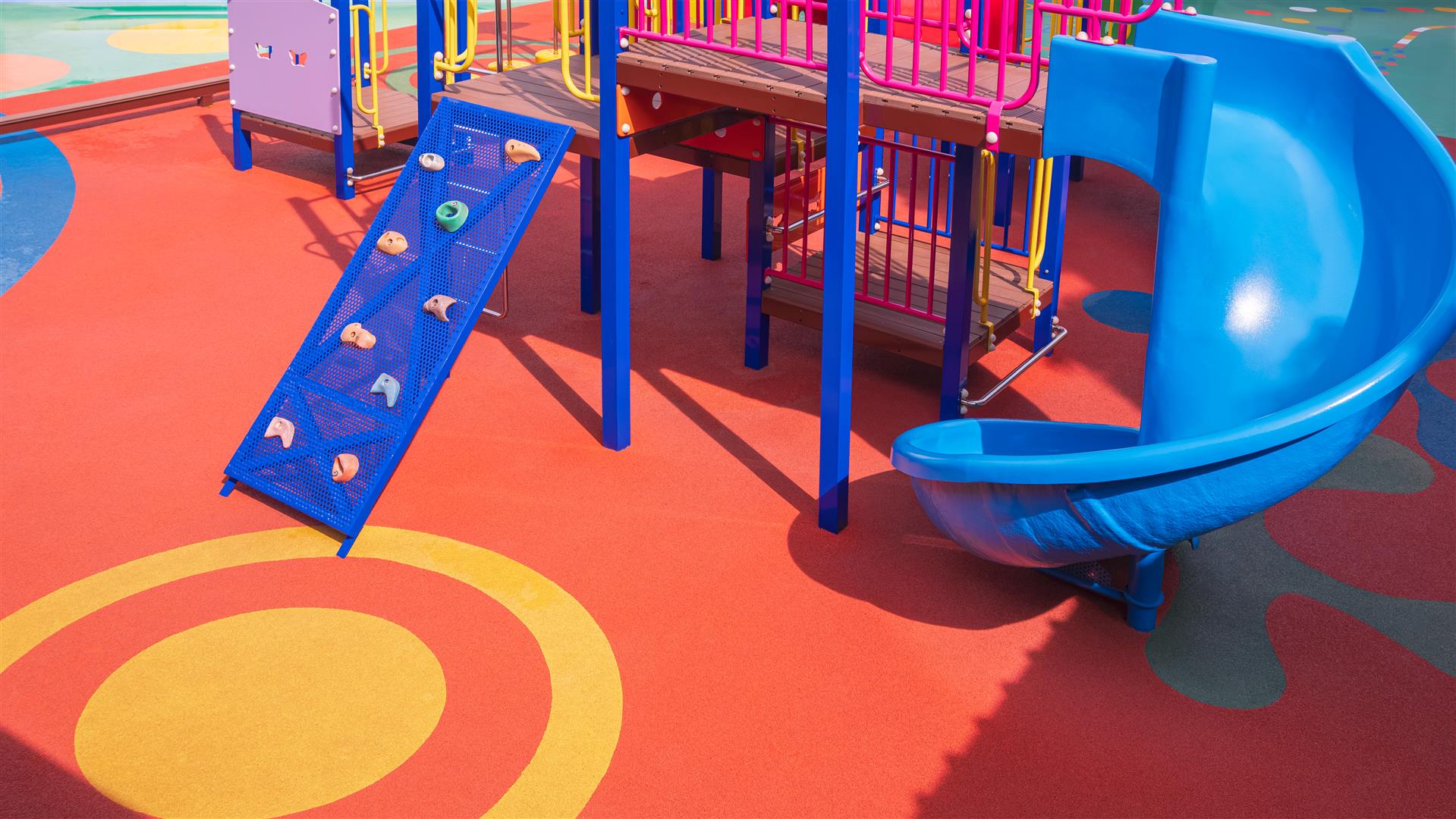
EPDM tiles are one of the most frequently chosen solutions in modern playgrounds, combining high durability, safety and aesthetics. They are resistant to abrasion and weather conditions, and their excellent cushioning effectively protects against injury during falls. A further advantage is the choice of different colours and patterns, which makes it possible to create visually attractive spaces for children. EPDM tiles are also easy to keep clean, which makes them a practical choice for heavily used playgrounds. Their main disadvantages are the higher initial cost and the need for professional installation, but their durability and functionality make this a long-term investment that ensures a high level of safety and comfort of use.
Poured EPDM/SBR surfacing – comprehensive protection
Poured EPDM or SBR surfacing is one of the safest and most durable solutions for large playgrounds. It provides the highest level of fall cushioning, high resistance to intensive use and easy maintenance. The ability to create any pattern and colour makes it both attractive and functional. Its disadvantages are the high installation cost and the need for professional installation, but it is the best choice for places requiring maximum protection and durability.
What criteria should be taken into account when choosing a surface?
To choose the best surface for a playground, several factors should be considered:
- Critical fall height (HIC – Head Injury Criterion) – this specifies the maximum height from which a child can fall without being at risk of serious injury. The higher the equipment, the more cushioning the surface should provide.
- Type of playground – in playgrounds intended for the youngest children, sand or wood chips may be used, but in heavily used places EPDM tiles or poured surfaces work better.
- Cost and durability – natural materials are cheaper but require regular maintenance. Synthetic surfaces, though more expensive to install, are more durable and easier to maintain.
- Resistance to weather conditions – the choice of surface should take account of weather factors such as rain, snow and UV radiation.
Which surface is best?
There is no single universal solution – the best surface for a playground depends on its purpose, the intensity of use and the available budget. For places frequently visited by children, EPDM surfaces or rubber tiles are an ideal choice, as they provide high cushioning and are easy to maintain. It is worth remembering, however, that the most important thing is to meet the PN-EN 1176 safety standards and to inspect the condition of the surface regularly. Investing in the right base is not only a guarantee of a long-lasting playground, but above all provides children with a safe and comfortable space to play.