



Modern playgrounds long ago ceased to be merely a place to play. Today they also serve an important educational function, supporting children’s development in many respects: physical, mental, social and emotional. Natural playgrounds are modern spaces that combine education with play, using child-friendly materials and elements that stimulate creativity and imagination. In this article we take a closer look at how educational playgrounds support children’s development and which equipment and solutions are worth using in them.
The role of the playground in a child’s educational process
Modern playgrounds for children are not only sets of swings and slides, but also comprehensive spaces that enable children to develop on many levels. Besides improving physical fitness, a playground can also have an educational dimension, allowing children to develop cognitive, social and even emotional skills. It is a place that enables learning through play, and every piece of equipment in the playground has its own role in this process. A playground should offer children a variety of forms of activity that develop both physical and mental abilities. Examples include equipment that presents challenges connected with solving puzzles, arranging blocks or interactive play boards. Play of this kind engages the child mentally, developing its abilities in logical thinking, problem-solving and concentration.
Choosing the right educational equipment
1. Educational panels and boards
Modern playgrounds are increasingly equipped with educational panels – interactive boards with puzzles, arranging games or logic games designed to develop children’s cognitive abilities. Elements of this kind engage children in intellectual activity, helping them to develop their problem-solving skills and concentration.
2. Sliding and rearranging equipment
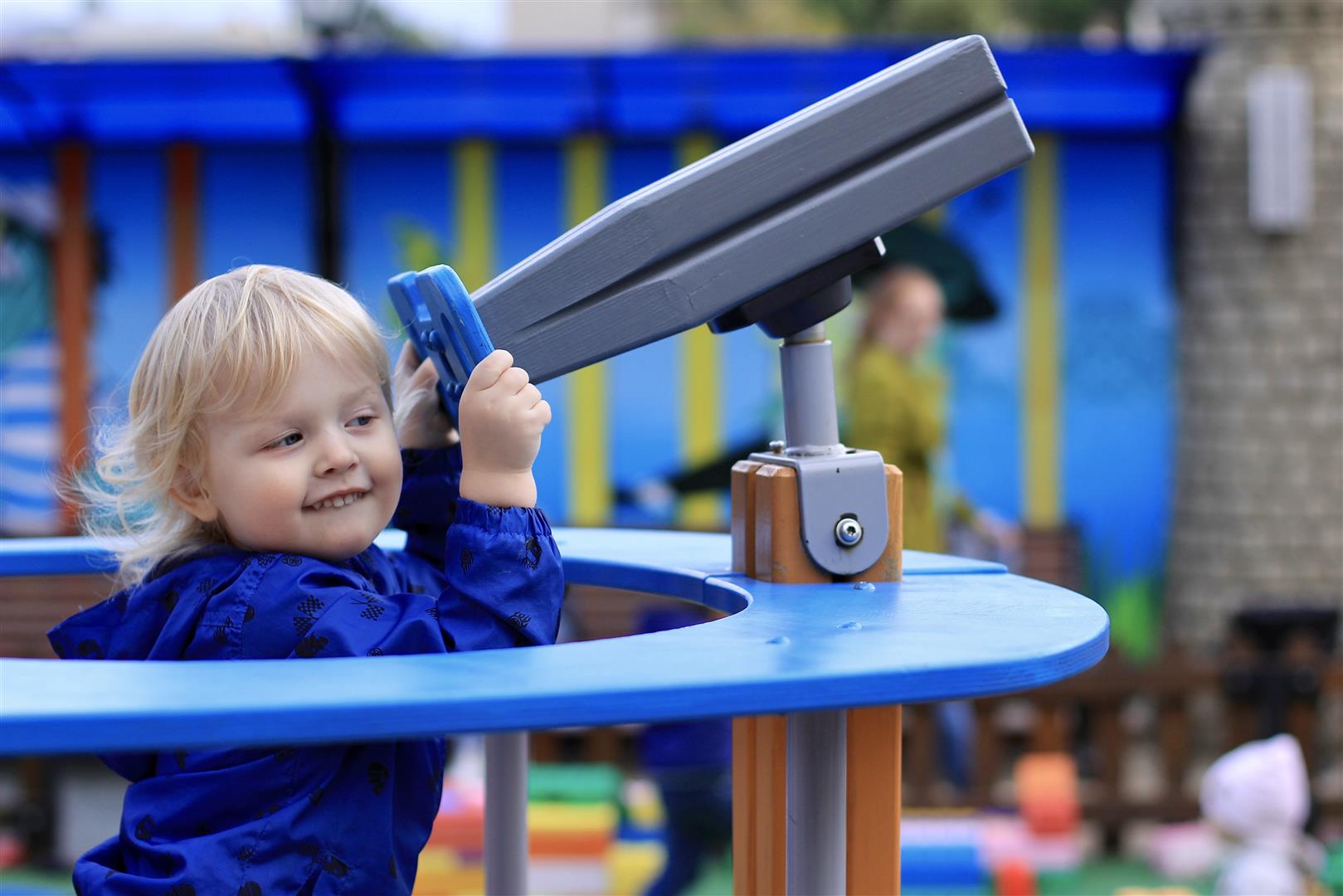
By manipulating sliding or rearranging equipment, children develop their motor skills and learn spatial thinking. Such equipment, besides being entertaining, also stimulates the sense of touch thanks to the use of materials with different textures, which further develops a child’s senses.
3. Sensory paths
Sensory paths are also becoming increasingly popular, enabling children to be physically active on various types of surface. Stones, sand, wood, pine cones, chestnuts – each of these surfaces has a different texture, which allows a child to develop its sense of touch. Activities of this kind are not only educational but also highly engaging, and they develop a child’s imagination.
How do educational playgrounds support emotional development and social skills?
A playground is also a place that supports children’s emotional development. Playing in a group enables children to learn cooperation, conflict resolution and the building of interpersonal relationships. Thanks to interactive equipment, children learn to express their emotions, solve problems and adjust their behaviour to the rules in force in a group. With equipment such as little shops or various vehicles (e.g. a fire engine), children can play different roles, learning social roles and negotiation and developing their imagination. In a playground, children exercise not only their physical but also their social skills, which allows them to function better in a group.
Safety in educational playgrounds
Although educational playgrounds place great emphasis on children’s development, an equally important element is ensuring safety. When designing a playground, care must be taken to ensure that the space is properly suited to the age of the children and that the equipment is made from durable materials resistant to weather conditions and use. In addition, it is important to remember to use appropriate impact-absorbing surfaces that reduce the risk of injury.