



In response to society’s dynamic development and growing awareness of the needs of diverse groups of children, STARMAX presents an advanced concept of inclusive playgrounds for people with special needs.
In response to the dynamic development of society and the growing awareness of the needs of diverse groups of children, STARMAX presents an advanced concept of inclusive playgrounds for people with special needs. It is not limited merely to providing the joy of play, but is intended to shape surroundings conducive to the integration of children of differing abilities. This approach focuses on the values of equality, universal design, multi-sensoriness, social interaction, safety, education and community engagement.
In connection with the new regulation of the Minister of Development and Technology of 27 October 2023, amending the regulation on the technical conditions to be met by buildings and their siting, both the playground and the recreational area must be adapted for people with special needs.
Universal design – building spaces without limits
In today’s dynamic world, where the diversity of society is becoming one of the most important aspects, STARMAX adopts the perspective of universal design in architecture. Universal design assumes the creation of surroundings accessible to everyone, regardless of individual ability, age or state of health. It is not only about meeting standards and regulations, but also about creating an environment that fosters full social integration and equality of opportunity.
People with special needs constitute a diverse group, comprising older people, individuals with disabilities and those who temporarily or permanently experience limitations in mobility or perception. In the context of playgrounds, creating spaces friendly to everyone becomes extremely important, taking account of the diversity of individual needs and abilities.
Different types of special needs, and accessibility and equality at playgrounds
Among people with special needs, several key categories can be distinguished. The first is people with hearing impairments, such as those who are deaf, hard of hearing or deafblind. For them, visual communication, sign language and technical solutions to aid hearing become important. A playground must take these differences into account, creating the conditions for full participation in play.
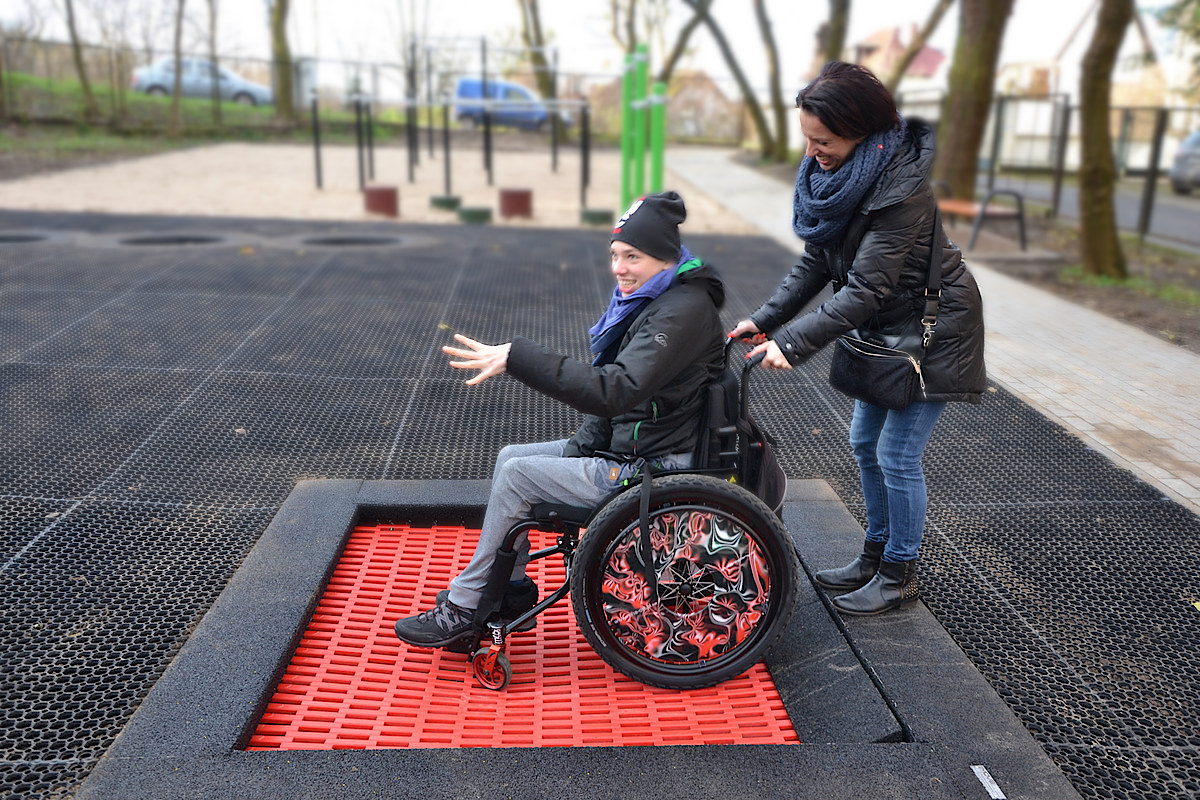
The next group is people with mobility limitations, such as those who use wheelchairs, use walking frames or have a limb amputation. For them, easy adaptation of the space, the elimination of architectural barriers and ensuring safe access to the playground’s attractions are key.
It is also worth paying attention to people with intellectual disabilities, those with mental illness or those with limited cognitive abilities. Accessibility of the play equipment, understandable instructions and a personalised approach to individual needs become key for this group.
Other groups must not be forgotten either, such as pregnant women, people with children or seniors. All these groups have their own specific needs that require consideration when designing playgrounds.
Inclusive playgrounds – the strength of diversity and acceptance
Creating spaces friendly to everyone not only eliminates barriers but also promotes inclusion and the acceptance of diversity. By designing a playground with people with special needs in mind, we create an open, integrative environment in which everyone can take joy in playing together. It is a challenge for society, architects and designers, but above all it is an opportunity to build a more accessible and equitable space for everyone.
The playground becomes a place distinguished by the absence of barriers and exclusion. It is an open space where every step, run or smile of a child is equally important. It creates an atmosphere of acceptance, where differences become a strength rather than an obstacle. All children, regardless of their level of ability, find common ground for sharing the joy of playing together.
This concept not only eliminates physical barriers to access, such as easy access for children using wheelchairs or walking frames, but also breaks down the social barrier. The playground becomes a place where there are no divisions or judgements, only the shared experience of joy and carefree play. It is a subtle reminder that every child is unique, and that diversity is a source of strength and enrichment for the whole playground community.
An inclusive playground and recreational area for people with special needs
A new feature in the regulations is the requirement to adapt both the playground and the recreational area for people with special needs. For the architect and developer, this means the need to choose suitable equipment and to design pathways so that people with unique needs can freely use these areas and facilities. The regulations do not specify whether special needs concern children or adults, which leaves a certain flexibility of interpretation. It is recommended, however, to provide play equipment that meets these requirements, as well as recreational equipment adapted to people with special needs.
In the case of inclusive playgrounds, it is worth focusing on equipment that is easily accessible from ground level, such as educational and manipulative panels, games and equipment with additional handrails and sound features for people who are blind. Another group of equipment is that fitted with ramps facilitating access to the higher levels of play sets. For small children, people with paralysis or mobility disabilities, equipment requiring assistance is suggested, yet still friendly to people with special needs, e.g. a bird’s-nest swing or a disc roundabout with wheelchair access.
Gyms and street workout accessible to people with special needs
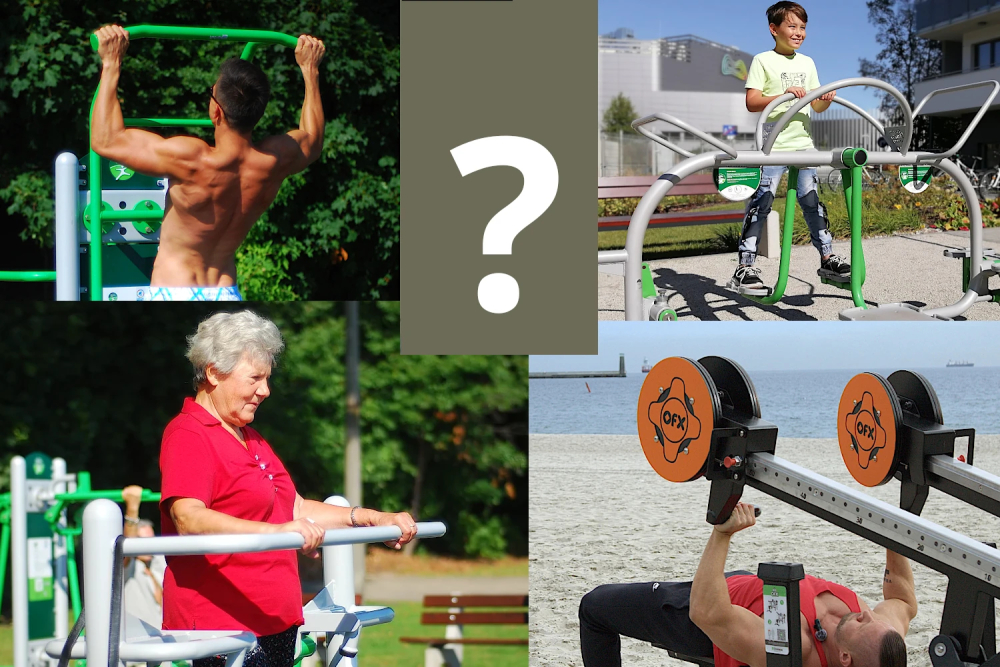
Outdoor gyms enjoy great popularity as elements of recreational areas, often used by seniors and adults. There are also gyms for children under 140 cm tall. For more advanced users, street-workout equipment – that is, calisthenics in the fresh air – is suggested. Some equipment in outdoor gyms and for street workout can meet the requirements of inclusive equipment, thereby serving a wider group of users, e.g. tai chi wheels, parallel bars, and a pull-down and press machine with additional handrails.