- New


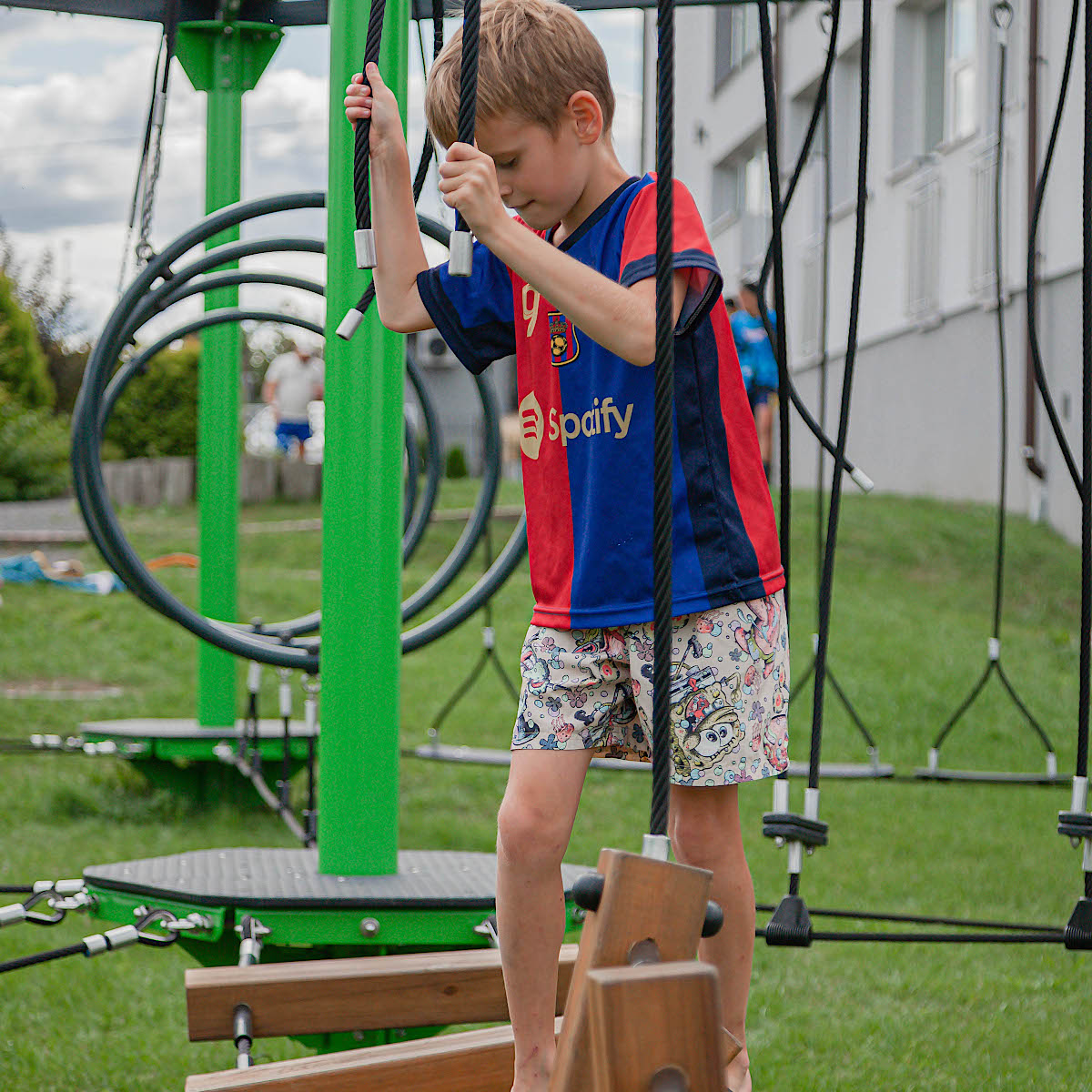
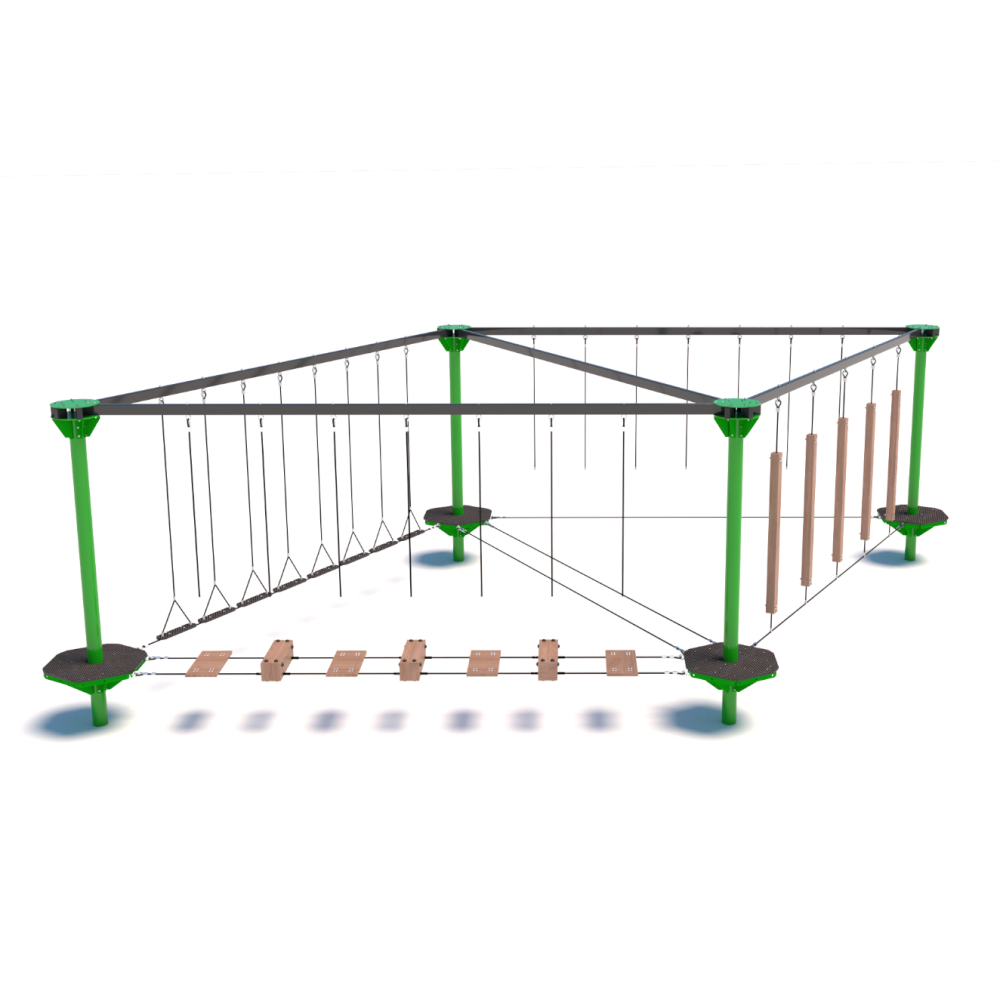
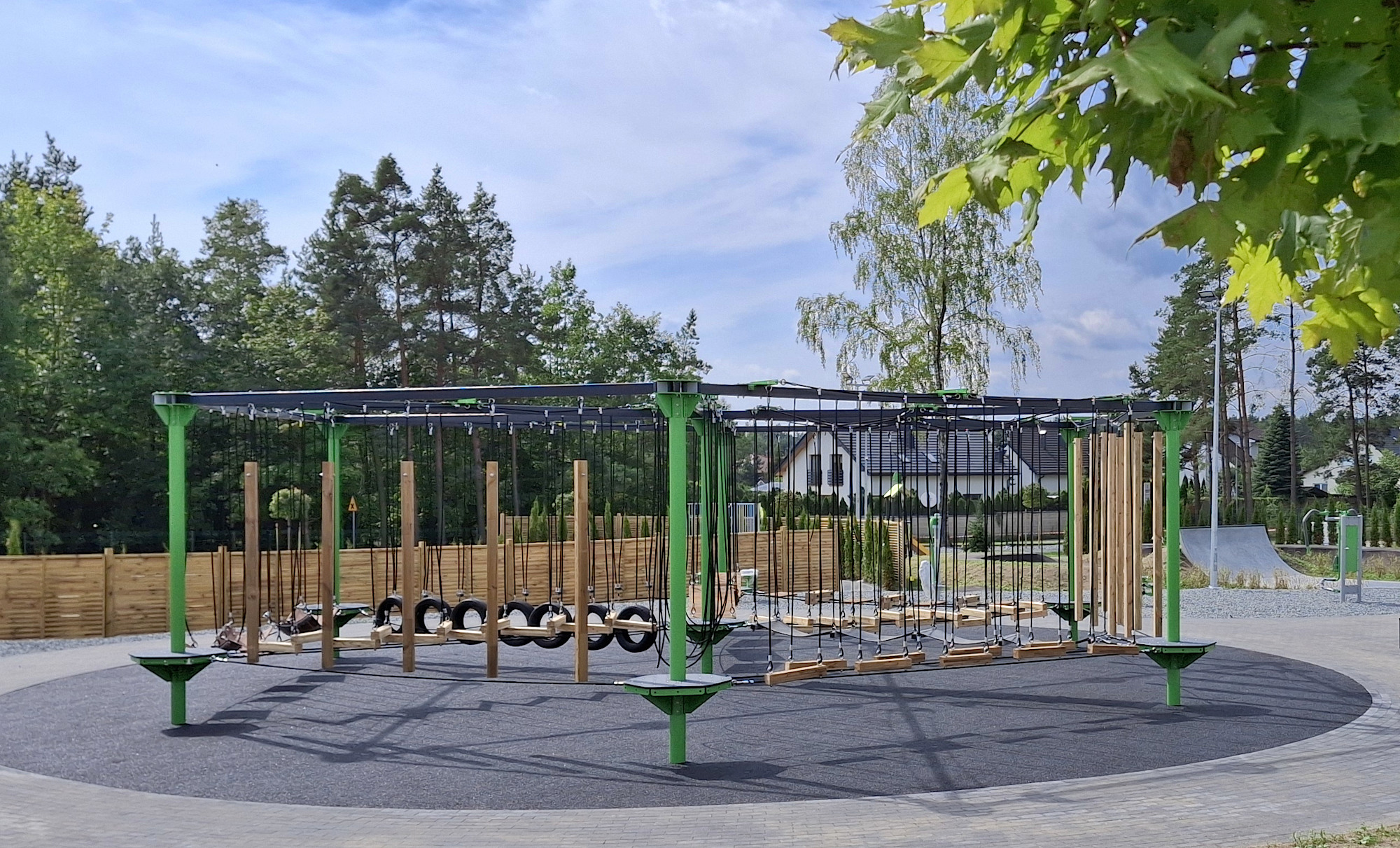
The P7116 set is a single-level Starmax rope park in the shape of a regular hexagon — 12 routes on three difficulty levels in a full, closed hexagonal construction. It's another variation of the popular layout known from P7102 — the same geometry, a different set of obstacles and a different movement sequence.
Where P7102 goes for one set of challenges, P7116 offers a completely different route in the same shape — a natural option for clients comparing variants or planning a second rope park at the same location.
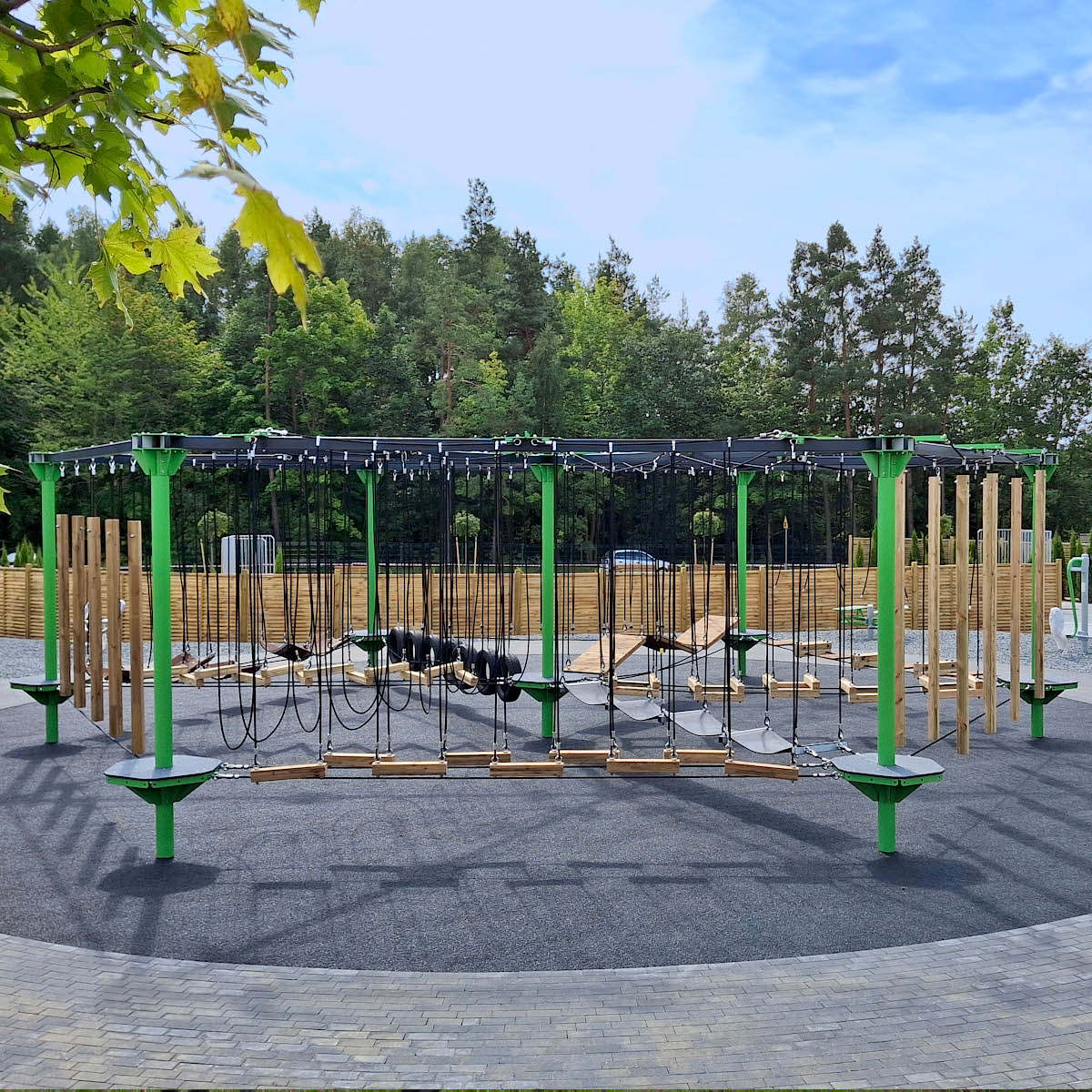
Play that draws children away from screens — Modular Adventure Park
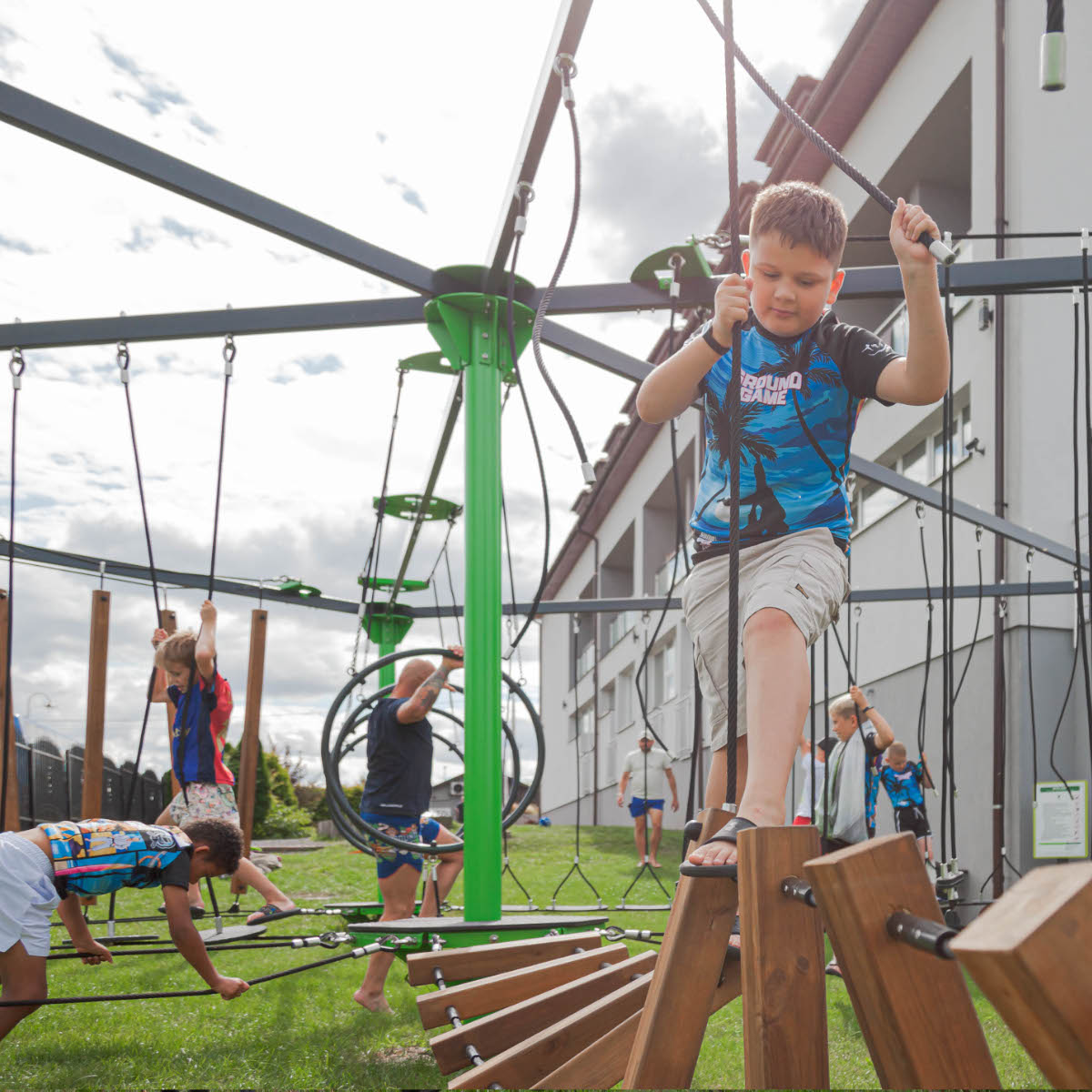
When we say 'rope park', most people see high walkways, harnesses, helmets and an instructor at every route. Our parks work completely differently — the routes are suspended a metre above the ground and that's one design decision that changes everything.
What you gain thanks to the low fall height (≤1 m):
But don't confuse it with a playground. The obstacles require strength, balance, coordination and often plain courage. Where a 10-year-old shrugs at the sight of a roundabout and slide — at the Balance Park they stay for another hour.
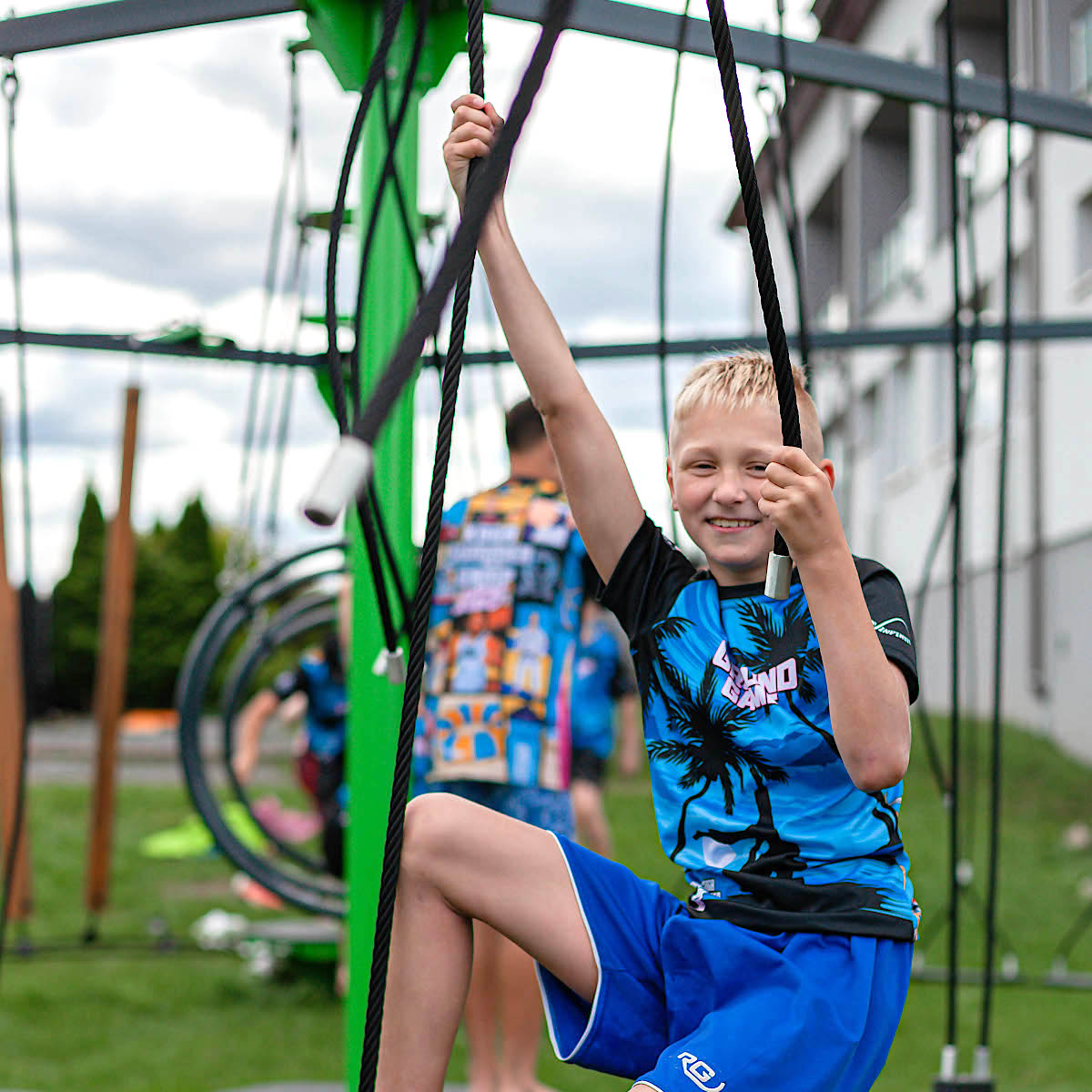
Just a few years ago, children aged 10–15 often couldn't find any attraction on modern playgrounds.Rope adventure parkwas created precisely with this group of users in mind. They combine the excitement of classic rope parks with the accessibility of a public recreational space. They require no instructors, harnesses or tickets, while offering a challenge that a traditional playground doesn't provide.
Call now and ask about the price list.
How does this park differ from a traditional forest rope park?
A traditional rope park requires trees or high masts, a harness, a helmet and an instructor. Our routes have a fall height below 1 metre — they work like a playground: no belay, no permanent staff, generally accessible all year round. They can be set up in a city, in a park, a hotel or a shopping centre.
Is this a fitness playground?
No. It's a rope park — much more demanding than a playground. The obstacles engage strength, balance, coordination and courage. Some are a challenge even for adults. It's aimed at children from age 6, teenagers and adults.
Does a rope park require a building permit?
Usually not — a free-standing construction below a certain height most often requires only a notification. We'll help prepare the necessary documentation for the authorities.
What surfacing is required under a rope park?
Any soft one: natural or artificial grass, bark, gravel, wood chips, EPDM. Concrete, asphalt and stones are not permitted.
Can the park be expanded in the future?
Yes. The modular construction allows buying additional routes and expanding the park at any time — without interfering with the existing structure. Individual routes can also be swapped for others.
How much does the P7119 rope park cost?
The price depends on the configuration, surfacing and scope of installation. Ask for an individual quote — we'll prepare an offer matched to your budget and terrain.
How long does installing a rope park take?
From 3 to 5 working days, depending on the size of the installation and the type of surfacing.
Does a rope park require regular inspections?
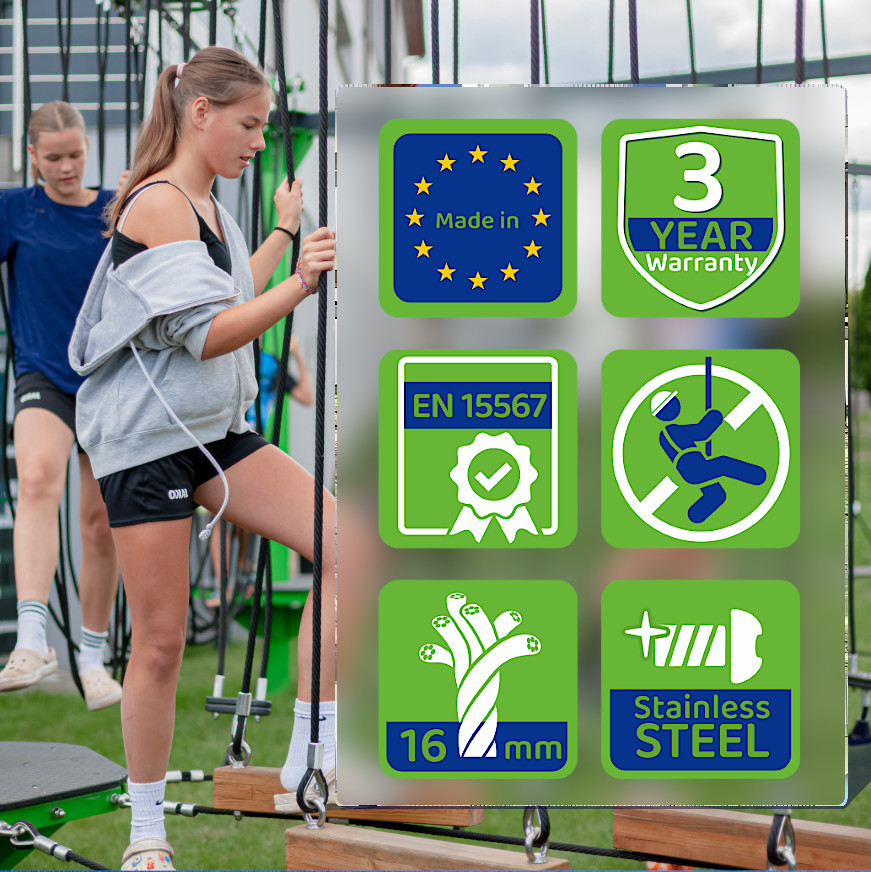
Yes — in accordance with standard EN 15567, regular periodic inspections are recommended. We carry them out as part of warranty and post-warranty service.
Photos and videos from completed investments
Use the free Starmax 3D planner
A guide for architects, municipalities and investors on our blog