



Want to give your children active outdoor recreation? A balance park is an excellent alternative to traditional playgrounds. Unlike high rope routes that require specialist equipment, a balance park offers low, safe routes.
Do you want to give your children active recreation in the fresh air? A balance park is an excellent alternative to traditional playgrounds. Unlike high rope courses, which require specialist equipment, a balance park offers low platforms and obstacles suited to the needs of the youngest children. This means children can safely climb, balance and overcome challenges, developing their agility and coordination in the process. It is a perfect opportunity to draw children away from their screens and encourage them to be active outdoors.
Below we set out the similarities and differences between traditional rope parks and balance parks – that is, modular rope parks with low courses from STARMAX.
1. Purpose:
Balance park: aimed at a wide audience, including children aged 6+, teenagers and adults. It can be an alternative to traditional playgrounds, offering greater scope for physical activity.
Traditional rope park: often more demanding and aimed at those seeking bigger challenges.
2. Height:
2. Height:
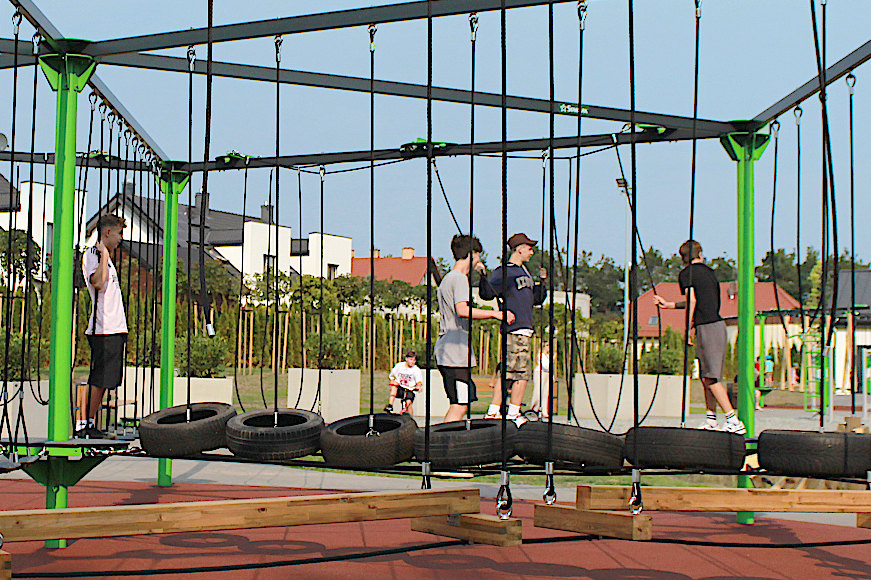
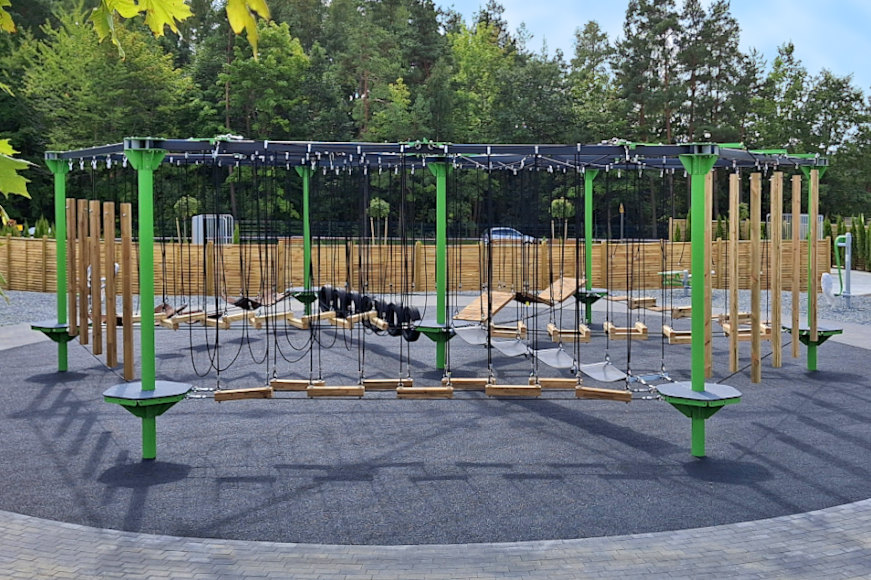
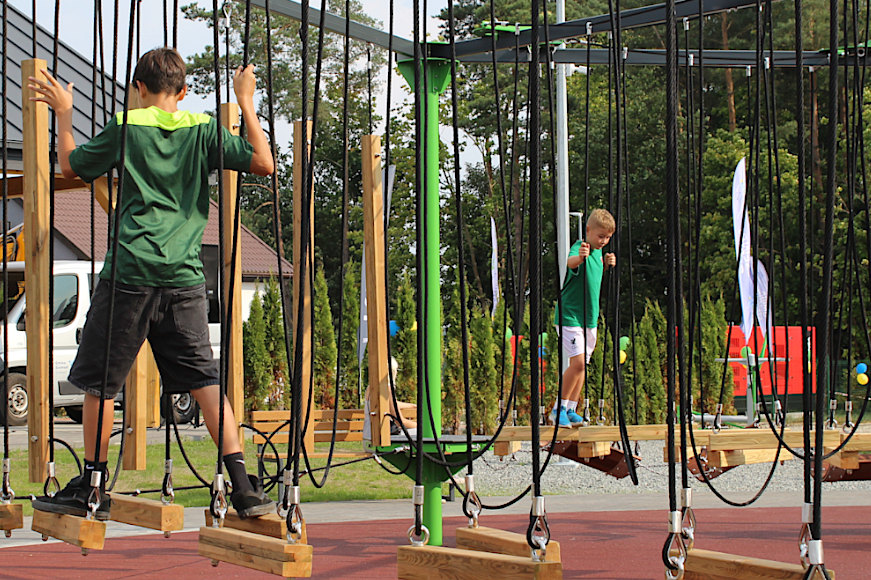
Balance park: characterised by low platforms and obstacles set at a height not exceeding one metre. This allows play without the need for a climbing harness or the supervision of an instructor.
Traditional rope park: offers courses at a considerable height, often reaching a dozen or more metres. These require the use of specialist climbing equipment, training and the supervision of an instructor.
3. Obstacles:
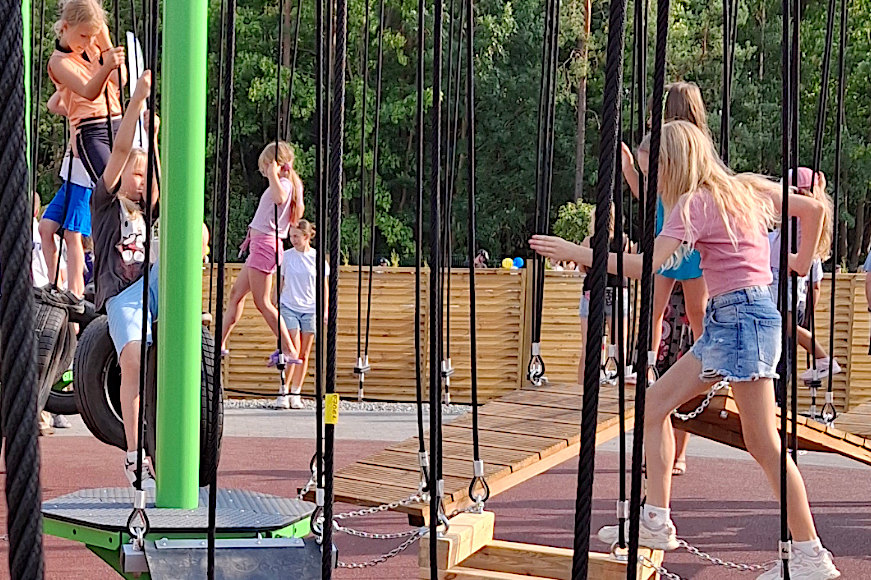
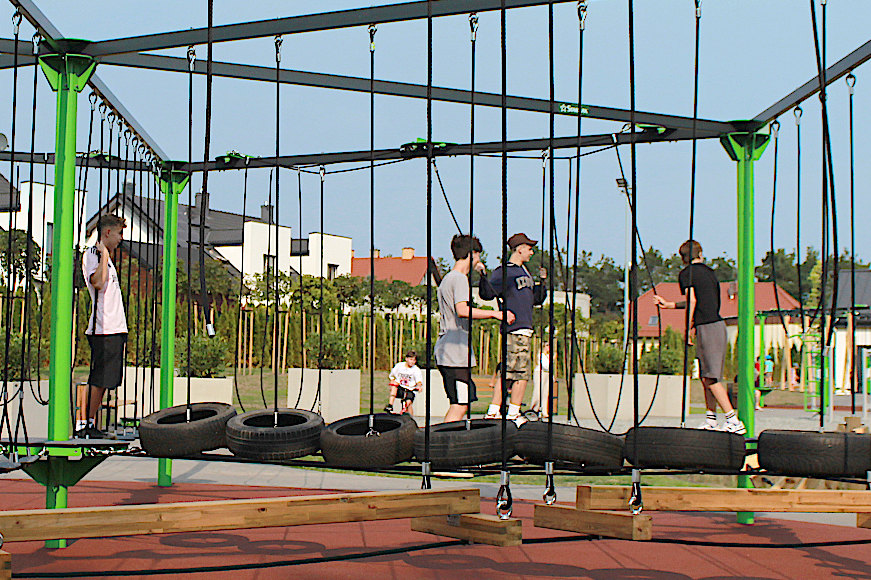
Balance park: offers a variety of obstacles, such as walkways, ropes, nets and beams, all adapted to the low height. The obstacles vary in difficulty from very easy to extremely hard. Because of the risk of obstacles swinging out and striking another child, some elements are joined with chains or ropes that limit any overly sudden movement.
Traditional rope park: has more complex obstacles, such as rope bridges, climbing walls and rope descents, which require greater strength and agility. The individual elements hang high above the heads of onlookers, so no restraints – even for heavy swinging beams – are needed.
4. Safety:
4. Safety:
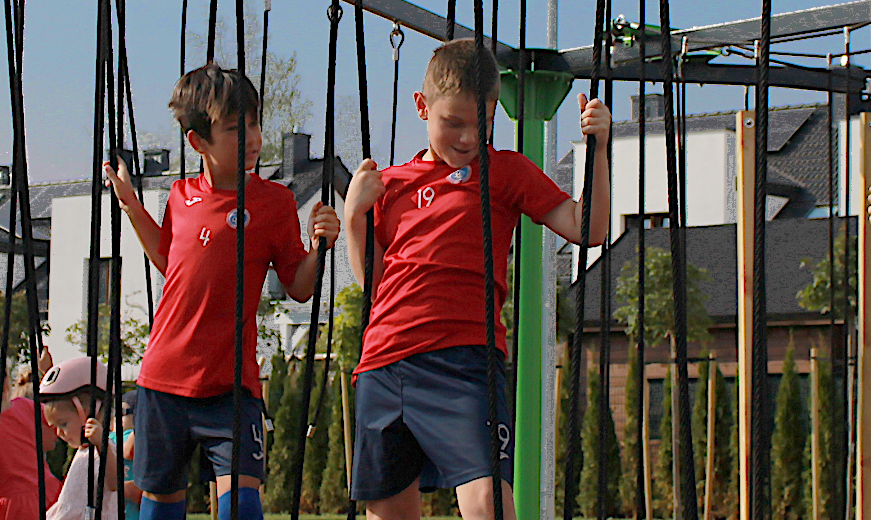
Both types of park: must meet strict safety standards. However, because of its lower height, a balance park is often seen as the safer option, especially for the youngest children. Please bear in mind, though, that on a low modular rope park the safety requirements arising from the standard – such as the risk of entrapment or the swinging of heavy elements – are considerably less strict than on playgrounds. Although no one checks the age or height of users of balance parks, just as on rope parks, carers should exercise common sense and remember that it is not suitable play for small children, and the risk of injury is considerably higher than on a playground.
5. Accessibility:
Another important difference between traditional rope parks and balance parks is the question of accessibility. Traditional rope parks often operate as enclosed facilities requiring the purchase of an entry ticket. They run seasonally and depend on the weather. Balance parks, by contrast, are usually accessible to everyone, all year round and completely free of charge. They are often located in municipal parks or other publicly accessible places, which makes them an excellent alternative for people who want to be active without incurring additional costs.
6. Maintenance costs:
6. Maintenance costs:
Another significant difference between traditional rope parks and balance parks is the cost of maintaining them. Traditional rope parks, being often commercial facilities, require the employment of qualified staff to attend to visitors, deliver training, supervise the courses and ensure safety. In addition, the climbing equipment must be serviced regularly, which generates further costs. Balance parks, on the other hand, thanks to their simple construction and the absence of any need to attend to visitors continuously, are far cheaper to maintain. It is enough to carry out regular technical inspections, perform seasonal repairs and, where necessary, modernise individual structural elements.
7. Construction
7. Construction
One of the key differences between traditional rope parks and the more modern balance parks is the way they are built. Traditional rope parks make use of the natural lie of the land, using trees as anchor points for ropes and platforms. This solution has its undeniable advantages, such as blending harmoniously into the woodland landscape and minimal interference with the natural environment. However, it comes with certain limitations. Above all, the location of such a park depends on the presence of suitable trees, which considerably restricts the choice of site.
Balance parks, on the other hand, have an independent, free-standing steel structure. This solution allows a park to be built in practically any location, regardless of the lie of the land and the presence of trees. The steel structure is extremely durable and resistant to weather, which translates into a long service life. That said, this solution also has its drawbacks. Building a steel structure is usually more expensive than using existing trees, and the appearance of steel elements may be seen as less natural.
8. Tradition and habits
8. Tradition and habits
Both traditional rope parks and balance parks have their own unique advantages and disadvantages. Choosing the right solution depends on many factors, such as the availability of land, the budget and users’ preferences. Balance parks, thanks to their versatility and durability, are an increasingly popular solution, especially in towns and in areas with a limited number of trees. Traditional rope parks, however, still have their supporters, who value their natural character and harmony with the surroundings.
Summary
To sum up, modular balance-park rope parks are a wonderful place for families with children who want to spend time actively outdoors. They are a safe and accessible alternative to traditional rope parks, offering plenty of scope for play and development. While traditional rope parks offer thrilling adventures at height, balance parks focus on play just above ground level, providing greater safety and accessibility. A balance park is the ideal complement to traditional playgrounds. Thanks to the low platforms and varied obstacles, children can develop their motor skills and coordination while testing themselves on ever more difficult courses.
The main advantages of a balance park are:
- Safety
- Accessibility
- A variety of obstacles
- Development of motor skills
- Outdoor activity
Balance parks, thanks to their accessibility and low height, fit perfectly into publicly accessible spaces. They complement urban playgrounds and, together with skate parks and pump tracks, are particularly popular with older children and young people. Traditional rope parks, on the other hand, as commercial facilities offering more extreme experiences, find their place in forests and recreation centres. Both forms of activity have their own unique strengths and can coexist, meeting the needs of different groups of users.
See the current range of STARMAX modular rope parks